Last updated October 20, 2026
Quick answer
Work an estate cleanout in this order: confirm who has authority over the property, secure the house, pull out documents and valuables, let family choose what they want, then sell, donate, recycle and haul what is left. Paint, chemicals and other hazardous leftovers need their own drop-off. Doing the steps out of order is how a will, a title or a box of photos ends up in a truck.
Before anything leaves the house
Before you donate, sell or throw away anything, make sure the person running the cleanout has the right to do it. That is usually the executor named in the will, an administrator appointed by the probate court, or, for a simple estate, the heirs agreeing together. If there is a will that leaves specific items to specific people, those items stay put until they go to the right person. If family members disagree about who gets what, or you are not sure the estate has been opened in probate yet, ask the estate's attorney before the cleanout starts. A cleared house cannot be put back.
Then secure the property. A house that sits empty draws attention, so do these the first week:
- Change the locks or add a deadbolt if you do not know who has keys.
- Forward the mail to the executor or a family member. Bills, bank statements and pension letters that arrive over the next few months tell you which accounts exist.
- Take photos or a video of every room before anything moves. It gives the family a record, and it helps if someone later asks where a piece went.
- Keep the heat on through a Toledo winter, even at a low setting. A vacant house with the furnace off can freeze its pipes in one cold snap.
- Check the basement. Many older homes around Toledo have a sump pump, and a failed pump in an empty house during spring rain can soak everything stored down there.
Find the documents and valuables first
Give the paper search its own day, before any sorting or hauling. The estate is going to need some of these, and they are rarely all in one drawer. Look for:
- The will, any trust papers and funeral or burial instructions
- Deeds, vehicle titles and mortgage papers
- Life insurance policies, pension and retirement statements and bank records
- Recent tax returns and anything from an accountant or attorney
- Safe deposit box keys, spare house and car keys
- Passwords written down for phones, computers and online accounts
- Cash, jewelry, coins, firearms and prescription medications
Where papers and keepsakes hide
People who lived in the same house for decades keep things in places that make sense only to them. Check kitchen drawers, the freezer, coat pockets, purses, shoeboxes on closet shelves, between the pages of books and Bibles, behind framed pictures and under drawer liners. In older Toledo homes, the basement, the attic and the space above the garage often hold boxes nobody has opened in years, and those boxes are where old photos, letters and military records turn up.
Move anything important out of the house the day you find it. Firearms, cash, jewelry and medications should not sit in a vacant home, and once a crew or an estate sale company starts working, you want those already gone. Bring a few sturdy boxes and label them by type: legal, financial, photos, keepsakes. When in doubt, set it aside and decide later. A box of maybe-important papers is easy to go through at a kitchen table. Paperwork that already went to the shredder is gone.
Let the family choose, then sort what is left
Once the papers and valuables are out, give each family member a chance to walk through and mark what they want. Colored tape or sticky notes work, and so does a shared list with photos for relatives who live out of state. Decide ahead of time how disagreements get settled, whether that is taking turns picking or letting the executor make the final call. Set a date for people to pick up their items so the rest of the job can move forward.
After that, sort everything that remains into four groups:
- Sell: antiques, quality furniture, tools, collectibles and anything that might be worth something. An estate sale company or appraiser can look before you decide.
- Donate: furniture, clothing, kitchenware, linens and household goods in usable shape.
- Recycle: metals, appliances and electronics.
- Haul: broken, stained or worn-out items and general trash.
Selling and donating without stalling the cleanout
Families often expect the furniture to be worth more than it is. An old dresser, a recliner or a dining set from the 1980s may not sell at all, and an estate sale almost always leaves a lot of things behind. Plan for that leftover pile from the start so the haul day is not a surprise.
Donations are a good way to keep usable things in the community, but they take time if you deliver them yourself one carload at a time. If you have a closing date or a lease ending, it can make sense to set aside the few pieces you want to give to a particular person or church, and let the crew handle the rest. On our cleanouts, usable furniture and household goods go to local charities, metals and electronics go to recycling, and only what is truly unusable gets disposed of. If items are donated, we can provide documentation for tax purposes.
Hazardous leftovers need their own drop-off
Almost every basement and garage in Northwest Ohio has old paint cans, stains, pesticides, cleaners, motor oil and a gas can or two. These cannot go in the trash, and junk haulers cannot take them either. We do not haul paint, chemicals, asbestos or medical waste, so set those aside in one spot before the crew arrives.
Lucas County runs a household hazardous waste program through its Solid Waste Management District. It is open to Lucas County residents and limited to individual households, with no material from businesses accepted. Drop-off is by appointment on Thursday and Saturday mornings: call 419-213-2230, tell them what you plan to bring and book a time. The county charges a fee by weight (paint and fluorescent bulbs are priced per item), so check the county's page for the current price list and the flyer of accepted materials. The county also lists ERG Environmental Services in Bowling Green (419-354-6110) as another option.
If you are not sure whether an old flooring tile, pipe wrap or ceiling material in an older home contains asbestos, leave it in place and have it tested before anyone disturbs it.
Haul day and the final walk-through
Before the truck comes, walk every room one more time and open every drawer, cabinet and closet. Papers and keepsakes still turn up at the end. Make sure the crew can get into the attic, basement, garage and any shed, and point out anything that stays with the house.
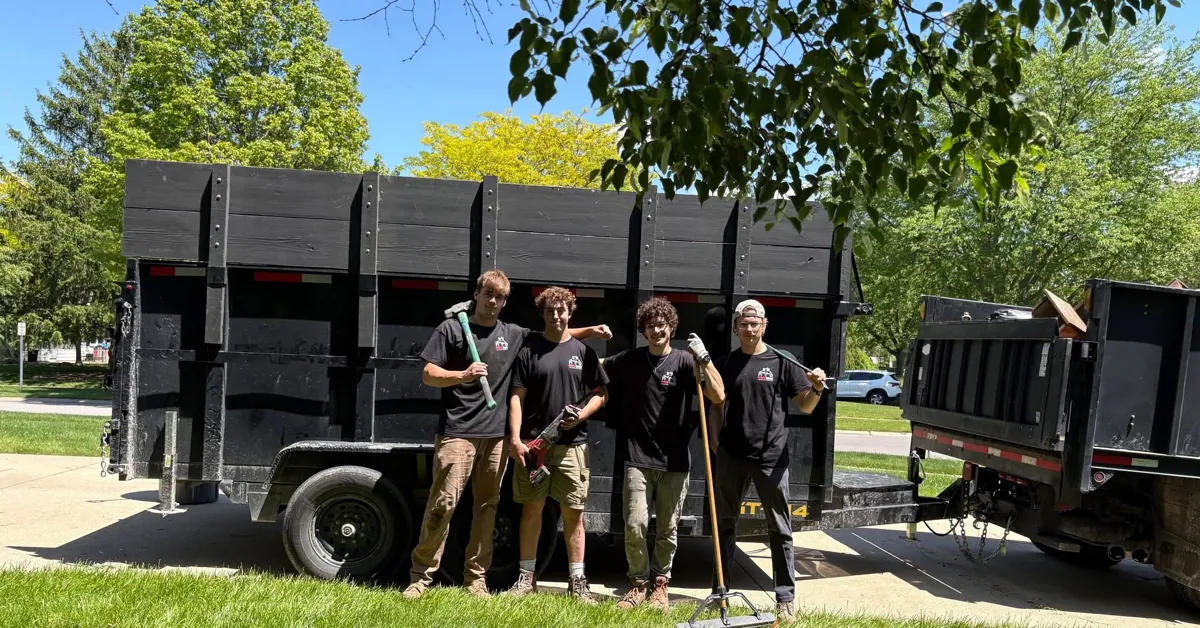
City bulk pickup can handle a few items, but a whole house is far past what the weekly set-out allows. Our guide to bulk pickup in Toledo covers those limits and the fine for putting out too much. For a full house, our estate cleanout crew clears the property top to bottom: furniture, appliances, closets, the attic, the basement and the garage. We go room by room, flag anything that looks important, like photos, paperwork or jewelry, and set it aside for you. Nothing gets tossed without your say-so.
Most single-family homes are done in one to two days, depending on how full the property is. We walk the house during the free estimate and give you a clear timeline you can plan around a closing date or a family schedule. If the family lives out of state or an executor is handling things, we can coordinate access and send photos and updates, so you do not have to be in Toledo. We can use unmarked trucks on request. If the house is more than a normal estate, with rooms that are packed floor to ceiling, see our hoarder cleanout service.
When the truck pulls away, walk the house again: closets, cabinets, the attic, the yard. Then it is ready for cleaners, repairs or listing photos. We serve Toledo and the rest of Northwest Ohio, and you can reach us through the contact page.
Need a hand?
Powerhouse handles estate cleanouts across Toledo & Northwest Ohio. Call (419) 928-5481 or get a free estimate online.